Printing can be a time-consuming and expensive activity. Luckily, several easy ways exist to save money and improve printing quality.
Whether you are printing a brochure, postcard or poster, a few things can make your job much easier and less expensive. We have rounded up some of our favourite printing tips to help you get the most out of your printer and keep your costs down!
1. Choose the Right Paper
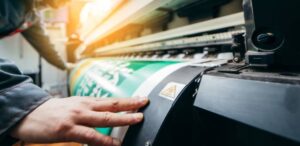 Paper is a vital component of any printing SA job, and it plays an important role in the look and feel of the finished product. However, it can also impact the cost of printing, which is why choosing the right paper for your needs is essential.
Paper comes in various types and sizes, each optimised for a specific purpose. For example, the paper used in the office differs from that designed for wedding invitations. In addition, there are different coatings and weights to consider.
Colour is another critical factor when choosing the right paper for your project. White is usually the standard for paper, but manufacturers offer shades such as blue-white, soft white and natural white. It can significantly affect the finished quality and feel of your printed piece, so choosing the colour that best suits your project’s purpose is a good idea.
It is best to use heavy-weight paper if you are working on a piece that will be handled a lot. It will help preserve the finished product’s quality and keep it looking fresh.
Choosing paper with high opacity is also a good idea, as this will prevent any areas not covered by ink from showing through. It is imperative that you print on both sides of the sheet.
Remember that the opacity of the paper is measured on a scale from 0 to 100, so it’s essential to pay attention to this when deciding on your paper. A 0-opaque sheet will show through if the ink is covered on both sides, while a 100-opaque sheet is entirely opaque.
In addition, it’s a good idea to choose paper with recycled content, as these papers are softer and run better on press than their virgin counterparts. They also perform well in specialty printing processes such as embossing and foil stamping.
Ask your printer for advice if you’re unsure what paper to use. They’ll be able to recommend the best paper for your project and even provide samples for you.
2. Check Your Resolution
If you’re printing an image, a resolution is one of the most important things to consider. It determines how much detail you can cram into your print and what size of print you can get without losing resolution or quality.
Generally speaking, the higher your resolution, the better it will look when printed. However, it’s also a good idea to keep this in mind when designing an image, as it’ll help you decide how large your file should be to get the most detailed results.
The best resolution when printing is 300 PPI, which stands for “pixels per inch.” It is the standard of print quality that most printers can handle. However, the optimum resolution can vary depending on the type of paper you’re using and the method you use to print your images.
To check your resolution, open the document you’re trying to print in an image editor and check the print preferences dialogue box settings. Select the correct resolution and set any other relevant preferences.
You should also make sure that your image files are in the right format, as this will ensure you’re printing at the best possible resolution. For example, if you’re printing a photo, ensure the file is saved as a JPG (JPEG format). You can also try adjusting the compression for better results.
Another way to check your resolve is to open the file in a graphic design program and measure its size on the screen. Most screens display images at 72 dpi, and most printers print at 300 dpi. If your photos are pixelated, they’ll still look blurry on the screen and pixelated when printed.
If you’re not sure if your images are the right resolution, we can provide free proof of your artwork so that you can see how it will look when printed. It will help you decide if the image is high enough for you to print, and if not, we can work with you to increase the file’s resolution for optimal printing results.
You’ll want to check your resolution whenever you create a new file. It’s especially important to do this if you’re using a photo or graphics file that you plan on using for prints, such as postcards, business cards, greeting cards, posters, and more.
3. Make Sure Your Files Are in the Right Format
Choosing the right file type for your printing project can make or break the outcome. The wrong format can lead to a missing graphic, misprinting with the wrong colours or a distorted image on your print.
Several file formats can be used for various purposes, including a raster (pixel-based) or vector (geometric-based) format. Knowing which file type to use will make the entire process of printing much easier and more efficient.
Raster files are the most common file type typically used in photos or digital artwork. They are made up of tiny squares of colour called pixels. Because of the nature of raster files, resizing them dramatically can cause the pixels to become blurry or “pixelated.”
JPEG is another popular file format that can work well for many purposes. However, it can also cause a loss in image quality, so it is recommended that you choose TIFF or PNG instead.
TIFF files are preferred for high-resolution printing, but they can also be large and take up a lot of space on your computer. It would be best if you also were sure that the monitors at the print shop are properly calibrated to your standards for brightness, contrast, gamma and colour.
Vector images are an excellent choice for many printing projects, as they can be enlarged to virtually any size without losing their detail. Using a vector image will save you time and money in the long run.
Generally, Adobe Illustrator or Photoshop are the best tools for creating vector images. These programs are easy to use and can help you create highly-detailed images that can be resized, printed, or edited.
PDF is one of the most popular file formats for printing and the world’s most widely used document format. These files are used in printing, from business cards to books to brochures.
If you are unsure what file format is best for your printing project, consult your printer. They will have specific file specifications for their equipment and can help you avoid any errors or problems with your file.