For many horse people, baling twine is a staple in the barn. It’s used for so many things – to keep a horse clean (tie a knot in the tail of your halter, for example) and to tie down items in a trailer.
Most made-in-the-USA options come in a guaranteed number of feet per carton. Check the spool to ensure it fits easily into the box on your baler without being crushed. For more information on how to tie baling twine, check this out.
Tie it Right
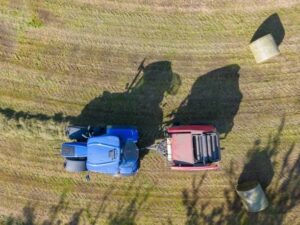 A common problem with hay equipment is that the twine does not hold. The spool of twine must be loaded correctly so that it pulls from the centre in a counter-clockwise direction. If this does not happen, twine can easily break or knot on itself, causing problems with the baler.
A reef knot is recommended because it is strong, durable, and easy to tie. It also has a flat profile that makes it easier to move through the twine guides in the baler. Another important tip is to use a twine disc or retainer when the baler runs. This part holds the twine while a large square or round baler is building a bale. The size and strength of the twine is also essential.
Most hay producers now run #9000 sisal twine because it is naturally biodegradable and has excellent tensile strength. However, some people still prefer metal ties on their bales because they are more robust and make a tighter bale.
Coastal Tip: Check the guaranteed number of feet per carton when shopping for twine. Many made-in-the-USA options, like BridonMAX round slit-film 110-weight twine, come with a 40,000-foot carton. This ensures that you have enough twine for the whole baling season.
Another critical factor is to choose the right knot for your application. Sisal twine is usually tied with a square knot, which looks like the phrase “right over left, left over right.” It is an excellent knot for joining twine sections in a baler as long as it is pulled tightly. However, this knot is one of the easiest to get wrong. It becomes a granny knot and loses its tensile strength if it is not tight. For more information on how to tie baling twine, check this out.
The most common mistake is to use a sloppy reef knot or a square knot, which is much less reliable. It looks like a granny knot and is very easy to loosen. A simple reef knot is better because it has a tight criss-cross, which helps to keep the twine from slipping or knotting on itself in the twine guides of the baler.
Tie it Left
While baling twine is incredibly useful in its thousand-and-one uses (it’s handy to tie up a bag of feed or replace that lost leash, for example), it is still dangerous, especially when left around. Anyone who has worked with horses knows the horror stories of them getting entangled in twine, and at well-run boarding stables and horse farms, the rule is that loose twine will be immediately disposed of.
Loose twine can be as dangerous to horses as flexible wire in a pasture or nails protruding from fences or stall boards. It can cause them to become disoriented and confused and even get in their eyes and lungs. Anyone who has seen the videos of horses getting tangled in twine while trying to escape from an enclosure or being loaded into a trailer can understand the sheer panic involved.
For this reason, baling twine must be discarded as soon as it is removed from the baler. This can be done in several ways, but the most important is to ensure that it goes into a proper container – either a designated bin that will hold twine until needed or a trash barrel. For more information on how to tie baling twine, check this out.
In addition to ensuring that the twine is disposed of, using the right kind of twine for baling is also essential. The size of the twine in a box, or the round spool that comes in pairs of two in the bale of twine, is a set standard that allows the twine to fit into the twine chamber in the hay baler.