If you need to have your palm tree removed, you must hire a company that knows how to do so safely and correctly. Furthermore, ensure they possess insurance and surety bonds if anything goes wrong during removal.
 Before selecting one company to handle your project, obtaining quotes from multiple providers is advisable. It will enable you to assess whether the price justifies itself.
Safety
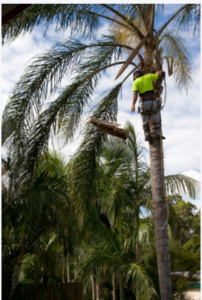
Safety should always be top of mind when it comes to tree removal work, so professional palm tree removal companies employ experienced staff and equipment to ensure the work is carried out without risk to employees or accidents.
First, an exhaustive inspection is conducted to ascertain the area’s extent and risk of danger. Employees must then receive training on safety precautions to prevent accidents or injuries while following work regulations.
Trees that have grown too close to power lines must be pruned carefully to avoid electrocution. A company can provide this service at an additional fee; hire an arborist with experience in handling trees near electrical hazards for optimal results.
Palm tree roots pose another safety risk, as their roots can damage subterranean infrastructure like electrical cables, sewer piping and water mains, leading to costly repairs as well as increasing fire or flood risks. It poses both potential costs as well as risks.
Additionally, a spotter should remain on the ground to monitor for splintering or trees falling in an unexpected direction. Furthermore, carrying ladders or climbing gear such as harnesses would be prudent if climbing the tree becomes necessary. For info, contact palm tree removal Adelaide.
Once the tree has been cut down, it should be thoroughly examined to ascertain that its branches have fallen orderly and no nearby areas were damaged by its fall. It will help determine whether further action is required, such as trimming back or repositioning it.
Next, carve a deep notch on the tree trunk where you wish it to fall. It will prevent it from flying upward, potentially injuring anyone nearby or possibly yourself.
Insurance
Palm trees are one of the most beautiful and widely popular landscape features in many communities, but if neglected, they can also become safety hazards for those below them. Luckily, services are dedicated to safely removing palm trees, so you don’t have to worry about damaging property or people in their removal process.
The cost to remove a palm tree depends on several factors, including the size and condition of the tree, location, insurance coverage, labour time and any associated fees or charges. Removal costs could include extracting from its base using a crane, cutting into pieces with saws before pulling out using a crane, grinding off roots from the stump with a grinder then disposing of waste materials properly.
Cost
Palm trees can be costly and dangerous to remove from property, with their heavy weight potentially damaging it and sharp tips that could splinter into dangerous needles causing lasting damage to their surroundings. Therefore, hiring professional tree services for removal would likely be recommended.
Costs associated with palm tree removal vary by location and species, from as little as $200 up to as much as $1,500 depending on its size and whether or not it needs to be roped down for removal.
Palm tree trunks can be challenging to cut through due to their dense fibrous material. It may also have spiny or smooth branches depending on species; cutting these is more expensive than other wood types, so before hiring any company, it is essential to get an estimate from them first.
If you own a large palm tree on your property, be sure to factor in the additional cost associated with using a crane for its removal – crane-assisted tree removal adds anywhere between $250 to $600 to its overall costs.
Once the tree has been cut down, you should also factor in the cost of removing its stump. In addition, it could become a potential safety hazard for your property if left in place.
Palm tree removal companies typically offer a stump grinding service. This procedure employs rotating tungsten blades to grind down the stump into the soil, killing its roots and preventing further problems in your yard. In addition, using it this way will make it much simpler to repurpose garden beds or new saplings.